

When we compare the monetary value of enterprise and consumer artificial intelligence, the difference is staggering: consumer AI has generated $12.1 billion to date, whereas enterprise AI has surged from $1.7 billion in 2023 to $37 billion in 2025. Why is there such a gap?
People mostly use free AI versions (97% of US consumers), which are enough to simplify their everyday routines. Businesses, on the contrary, need more niche AI solutions that help them achieve measurable business outcomes: enhanced product throughput, increased revenue, or improved suppliers’ verification procedures. That’s why 96% of industrial organizations plan to increase their manufacturing AI investments by 2030.
While consumers treat AI as a new “Google” (only with clear instructions), businesses perceive it more as an asset that requires continuous harnessing to produce continuous results.
We’ve prepared this analysis based on our experience delivering end-to-end AI and data services to businesses operating across different industries and countries. You’ll get clear insights into how consumer and enterprise artificial intelligence differ, why this distinction matters to modern businesses, and how companies can benefit from enterprise and industrial AI.
Enterprise AI vs. consumer AI: Retrospective analysis, definitions, and industry leaders’ views
The rise of consumer AI began in 2022, with the public announcement of ChatGPT. This was a breakthrough for large language models (LLMs). Everyone got agitated that a generative AI application had finally arrived and would take our jobs in a snap. At that time, both businesses and consumers were largely on the same page, as AI tools were free to test. Business benefits weren’t yet clearly visible because generative AI alone did not address enterprise requirements such as workflow integration, permissions, auditability, or domain accuracy.
We were all at the point of “Innovation Trigger” on the Gartner AI hype curve. Then we passed the peak of “Inflated expectations” and stepped into a long stage of “Trough of Disillusionment”, which some claim will soon be over. A CDO at Profisee, Malcolm Hawker, mentioned in his most recent podcast episode that in 2026, businesses will slowly begin to climb the “Slope of Enlightenment”, making confident steps towards a “Plateau of Productivity”.
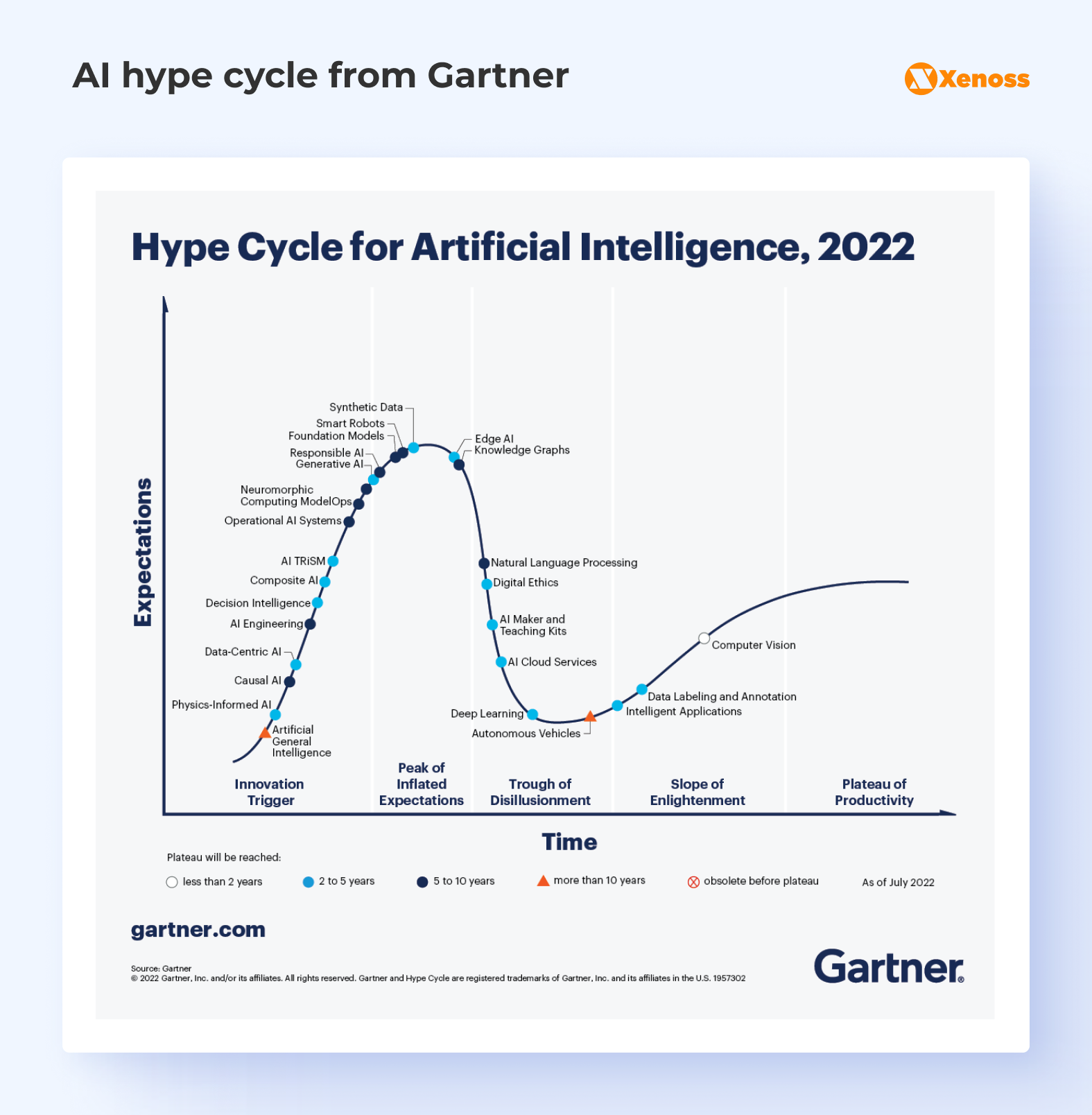
There is now a clear distinction between enterprise vs. consumer AI. As businesses see much more potential benefit from this technology than consumers do.
What are enterprise AI and consumer AI?
Enterprise AI is the process of implementing machine learning and generative, agentic, predictive AI, or computer vision into business operations to solve specific problems or help achieve goals. This form of AI requires up-to-date business data that must be thoroughly prepared for AI use.
Consumer AI are publicly available generative AI services, such as ChatGPT, Gemini, Claude, DeepSeek, Grok, and Perplexity. People use them to make personal or professional queries for individual benefit only.
To compare these notions in greater detail, see the table below.
| Dimension | Consumer AI | Enterprise AI |
|---|---|---|
| Primary goal | Personal productivity, creativity, and convenience | Measurable business outcomes (revenue, cost, risk) |
| Users | Individuals | Teams and entire orgs |
| Context | General and user-provided prompts | Deep org context across data and systems |
| Data | Public/general knowledge and personal files | Sensitive proprietary data and regulated datasets |
| Tolerance for errors | High (“good enough” is acceptable) | Low (hallucinations create real business/safety risk) |
| Outputs | Suggestions, drafts, answers | Content, decisions, or actions inside workflows |
| Integration | Minimal (standalone apps) | Heavy (ERP/CRM, data platforms, IT/OT systems) |
| Governance | Optional | Mandatory (policies, approvals, audit trails) |
| Security model | Basic user-level controls | Enterprise IAM, access boundaries, compliance controls |
| Evaluation | Subjective (“Does it help me?”) | Formal (SLAs, test suites, KPIs, monitoring) |
| Reliability requirements | Nice-to-have | Non-negotiable (resilience, fallback paths) |
| Change management | Low | High (training, adoption, process redesign) |
| Deployment | App updates | Controlled rollout (staging, guardrails, versioning) |
| Buying decision | Individual purchase | Requires procurement, legal, security, and finance approval |
| Success metric | Engagement and satisfaction | Measurable business impact, accountability, and auditability |
What do experts say?
In the LinkedIn post on the difference between consumer and enterprise AI, Rodney W. Zemmel, a Global Head of Blackstone Operating Team and a former Global Leader of AI transformation at McKinsey, gives an interesting analogy:
Consumer adoption has far outpaced enterprise adoption. Why? Because the two are fundamentally different challenges. Consumer AI is a Swiss Army knife — one adaptable tool for many tasks. You might use the scissors one day, the tweezers the next, even the obscure tool for removing stones from horse hooves.
Enterprise AI, by contrast, must be a precision machine tool — reliable, repeatable, and tuned for demanding, high-stakes work. Turning a general-purpose model into something enterprise-grade requires “hardening”: infusing it with your proprietary data and context, embedding it in workflows, and adding human-in-the-loop checks.
Without these additional workarounds, AI in the enterprise won’t function properly and will pose more of a threat to the business than an actual benefit.
A Chief Revenue Officer at Typeface, Jamie Garverick, shares a complementary view:
Consumers can experiment freely. If something’s off, they move on. Enterprises don’t have that luxury. Brand, trust, accuracy, and consistency matter every time something goes out the door.
Where does industrial AI fit into the narrative?
Amod Satarkar gives a full definition in his post by comparing industrial artificial intelligence with general (consumer) AI:
General AI is about learning patterns from data to make predictions or decisions. Think Netflix suggestions or ChatGPT. Industrial AI, on the other hand, is built for complex, high-stakes environments like factories, energy grids, aerospace systems, or predictive maintenance of equipment. Here, the AI doesn’t just need to be smart—it must be accurate, explainable, fast, and reliable.
This means that industrial AI is a practical application of enterprise AI in manufacturing, oil and gas, energy, and logistics industries.
Neil C. Hughes, a famous author and podcast host, wrote an extensive LinkedIn article on the results of the Industrial X Unleashed event, where he mentioned an insight into the importance of industrial AI from one of the keynote speakers:
A technician standing two hundred feet above the ground in freezing conditions cannot rely on a generic chatbot to solve a safety-critical problem. The problem is that consumer AI tools lack awareness of the context, environment, regulatory pressures, and consequences of a wrong decision.
For that reason, industrial AI system focuses more on algorithms that understand the physical world than on those that understand human language.
Consumer AI is too general and simplistic to cover all the enterprise leaders’ needs; it can even be dangerous if relied on too heavily in industrial settings.
Key specifics of enterprise AI: What businesses need to know
After defining enterprise and industrial AI, we can focus on their core characteristics.
Proprietary data ingestion
Enterprise AI solutions produce the best results when they can query real-time business data via enterprise knowledge bases built on retrieval-augmented generation (RAG). RAG-based systems provide more accurate outputs, as they can use data beyond their training set. Vector databases are another architectural layer necessary for fast and reliable retrieval of unstructured data.
Chetan Gupta, PhD, Head of AI at Hitachi Global Research, explained the specifics of industrial data:
Industrial data is inherently multimodal—ranging from text in manuals and logs, to video from worksites, time-series sensor data from equipment, and discrete event data from operations. In practice, effective solutions often require models that operate across one or more of these modalities.
Such peculiarities of industrial data mean that, in the case of enterprise AI, data engineers not only prepare business data for AI use but also ensure that the model architecture matches the data modalities, selecting multimodal models when data spans text, video, sensor readings, and operational logs.
Infrastructure dependence
Enterprise AI requires deep integration into the company’s workflows, which is why companies need to build a strong AI infrastructure to support model training, inference, and maintenance. This process may involve purchasing hardware and software components and defining a deployment environment (on-premises, cloud, or edge).
Chetan Gupta, for instance, emphasizes that for industrial companies, edge AI deployment is the most effective way to achieve true IT/OT convergence:
Many industrial use cases require not only on-prem solutions, but true edge deployment to meet stringent latency, reliability, and data-sovereignty requirements.
Accuracy, customization, and model fit
In enterprise settings, hallucinations are a risk. When AI influences procurement decisions, safety checks, inventory planning, predictive maintenance, or compliance reporting, even a small error can cascade into downtime or financial loss.
That’s why enterprises must invest in:
- model selection (fit-for-purpose)
- prompt and workflow engineering
- evaluation harnesses and test suites
- constraint-based outputs
- escalation and human-in-the-loop routing
Scale and integration requirements
Industrial AI should integrate not only with enterprise software (ERP/CRM/data platforms), but also with operational legacy systems such as MES, SCADA, PLCs, asset management enterprise tools, and IoT devices.
This is where enterprise AI differs most from consumer AI types: it must behave as a reliable component inside a distributed system. That’s why scaling different AI platforms can become difficult.
However, McKinsey points out that as of the end of 2025, enterprises are plucking up the courage to move beyond pilot and AI experimentation stages to scale their AI initiatives and garner enterprise-wide benefits.
Governance and compliance
Enterprise AI cannot scale without governance. Data security, data privacy, access permissions, traceability, and auditability become mandatory, especially in regulated industries and safety-critical operations.
Frank Antonysamy, Chief Growth Officer for Hitachi Digital, explains the mindset difference between industrial AI and consumer AI in this respect:
For each industry, we must understand the compliance requirements and ensure 100% adherence. There’s no choice if you want to deploy at scale in these environments.
One way in which we achieve this is through extensive simulation. We simulate millions of real-world scenarios using synthetic data. Only when we’re confident these models will behave predictably across every situation do we put them into production. It’s the opposite of the “release and refine” approach that’s common with consumer AI because in our world, you can’t afford to learn from failure in production.
AI providers increasingly recognize the importance of data security for their business clients. For example, Anthropic obtained HIPAA compliance for their Claude for Healthcare product, while OpenAI has expanded ChatGPT Enterprise with enhanced data protection and compliance features specifically designed for regulated industries.
Real-life success stories: How industrial companies benefit from enterprise AI
Enterprise AI implementation won’t happen overnight, but the investment of time and budget is well-justified, as the following examples of artificial intelligence in industrial automation prove.
Digital twin optimization at the Siemens Electronics Factory, Erlangen
The Siemens Electronics Factory in Germany demonstrates how production digital twins can replicate physical production lines and optimize operations through AI-powered simulation. By collecting real-time data directly from machines on the factory floor and feeding it into the digital twin via IT/OT applications, the facility achieved remarkable results.
The factory reduced material circulation by 40% and energy usage by 70% through simulation-driven optimization. For automatic guided vehicle (AGV) systems, measuring data directly from the vehicles and running it through the digital twin increased simulation accuracy by more than 10%, enabling better factory floor layout decisions and smoother material flow.
ENEOS Materials: ChatGPT Enterprise at manufacturing scale
ENEOS Materials, a Japanese chemical company specializing in synthetic rubber and thermoplastic elastomers, was among the first companies in Japan to adopt ChatGPT Enterprise. Their deployment strategy offers a blueprint for enterprise AI implementation in manufacturing environments.
The results are compelling:
- More than 90% weekly active usage across the organization, with over 80% of employees reporting significant workflow gains
- 90% reduction in data aggregation and analysis time for the HR department
- Months-to-minutes compression for complex investigations using deep research capabilities
- Over 1,000 custom GPTs created across the company to address specific operational needs
Taku Ichibayashi, Manager at ENEOS Materials’ R&D Department, notes:
To maximize our business results with AI, ensuring a secure environment for handling proprietary information was essential. ChatGPT Enterprise met our internal cybersecurity requirements and provided the output accuracy we required.
How to maximize ROI with AI for enterprise
We’ve compiled a range of best practices that can help organizations ensure enterprise AI ROI more effectively:
- Start with a data architecture assessment. Define areas for optimization (e.g., data quality issues, limited on-premises data storage, or siloed data with restricted cross-company accessibility) and establish a data strategy, which is necessary for AI implementation and use.
- Focus on clear business problems or goals. Rather than pursuing AI for its own sake, identify specific operational challenges where AI can deliver measurable improvements. Set clear KPIs to measure outcomes and tie AI initiatives to business objectives from the outset.
- Differentiate between ROI types. This means setting different expectations for enterprise AI adoption. ROI focuses on financial returns, ROE on employee productivity, and ROF on the outcomes of AI research and development initiatives.
- Redesign workflows around AI capabilities. The companies capturing the most value from AI aren’t simply deploying models on existing processes. They’re fundamentally rethinking how work gets done. McKinsey identifies this “transformation mindset” as a key differentiator between the 6% of high performers and the remaining organizations still stuck in the pilot mode.
Takeaway: With realistic expectations and a structured rollout, enterprise AI can deliver measurable results quickly. However, pursuing implementation without a clear roadmap, AI-ready data foundations, and organization-wide change management often leads to wasted spend and limited business impact.
What’s next for enterprise AI and consumer AI
More is yet to come in the enterprise AI development services. For instance, Sam Altman, CEO of OpenAI, has announced that 2026 will be the year of enterprise AI at OpenAI, which means more capabilities for organizations to adopt AI in an easy, personalized way.
Gartner’s 2025 AI Hype Cycle suggests key enabling technologies like ModelOps and AI Engineering are approaching the “Plateau of Productivity”, signaling that the infrastructure for scalable enterprise AI is maturing.
Meanwhile, emerging capabilities like agentic AI (systems capable of autonomous multi-step workflows) are beginning to move from experimentation to early production deployment, with McKinsey reporting that 23% of organizations now scale agentic AI within their enterprises.
When it comes to AI consumer products, Foundation Capital predicts that in 2026, the focus will shift to e-commerce, with AI agents making purchases instead of humans. Already, 70% of shoppers have used AI tools in their purchasing journeys, and industry analysts expect consumers to increasingly delegate shopping, calendar management, and routine decision-making to AI assistants, which creates an entirely new category of “life manager” services or personalized virtual assistants.
Final takeaway
The gap between consumer and enterprise AI will continue to widen as businesses recognize that specialized, integrated, governance-compliant AI enterprise systems deliver fundamentally different value than general-purpose chatbots. While consumer AI products have democratized access to generative AI capabilities, enterprise AI represents the true frontier for productivity and competitive advantage.
Organizations that move beyond AI experimentation to scalable integration into enterprise workflows (by addressing data architecture, infrastructure readiness, and change management alongside model selection) will capture measurable ROI during this transition.
The key differentiators: proprietary data ingestion through RAG architectures, deep integration with operational systems, governance frameworks that satisfy regulators, and accuracy standards that eliminate costly hallucinations.
The Xenoss team helps industrial companies make AI an integral part of their operations by building AI-ready data foundations, integrating models into real workflows and systems, and putting the right governance and monitoring in place.